


Back Positioning
The wedge may be positioned behind the back to provide additional support during appropriate resting or side-positioning configurations.
¿Tienes una cuenta?
Inicia sesión para finalizar tus compras con mayor rapidez.
$0.00 USD
Soporte Empresarial, Cuidado Humano
LPO
200 en existencias
No se pudo cargar la disponibilidad de retiro
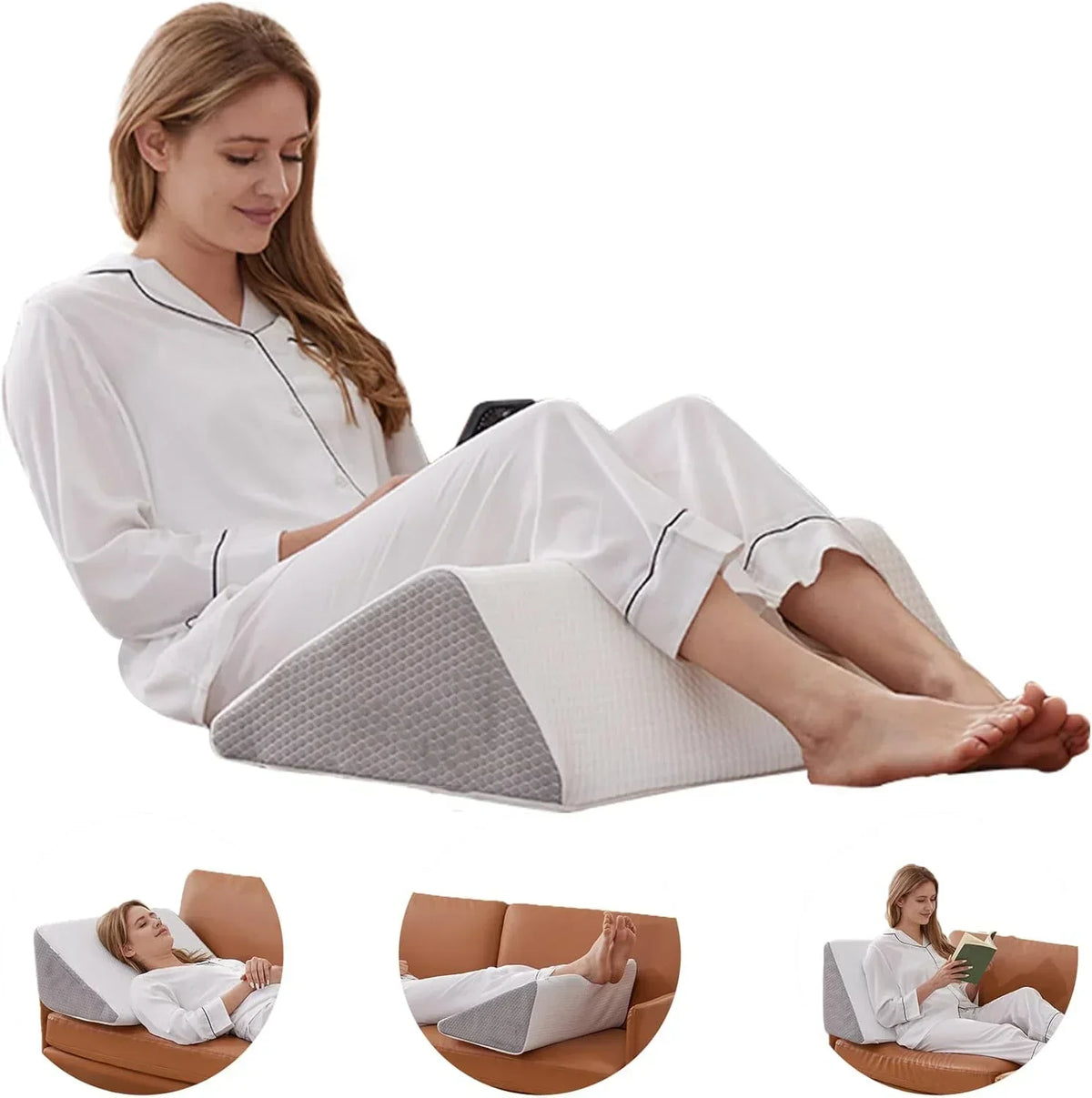
A versatile memory-foam body positioner designed to support comfortable positioning in bed, leg and knee elevation, back support, rest, and appropriate caregiver-assisted repositioning — particularly useful in residential care environments where individual positioning needs can vary from resident to resident.
Residents can have very different positioning needs depending on mobility, comfort, endurance, sleep habits, functional ability, recovery status, and individual care instructions.
This High-Density Memory Foam Wedge Positioning Pillow provides a firm, angled support surface that can be used in different orientations depending on the intended positioning purpose.
It may be positioned behind the back, beneath the legs or knees, or alongside the body when appropriate to provide additional support during rest.
For California RCFE owners, ARF operators, assisted living homes, board-and-care facilities, caregivers, residential care administrators, residents, and families , it can be a useful comfort and positioning accessory when the chosen configuration is appropriate for the resident.
The wedge is filled with high-density memory foam, allowing the support surface to contour around the body while retaining the shape needed for positioning.
Memory foam responds to pressure and body contact differently from a conventional loose-fill pillow, providing a more structured support surface.
This makes the wedge useful for applications where a standard soft bed pillow may compress too easily to maintain the intended angle.
The wedge may be positioned behind the back to provide additional support during appropriate resting or side-positioning configurations.
The angled surface may be placed beneath the legs when elevation is appropriate for the resident.
May provide a structured surface beneath the knees to support a preferred resting position.
The wedge shape may help support an appropriate resident in a caregiver-directed side or partially turned position.
May serve as one positioning accessory for residents who spend significant time in bed and require assistance changing or maintaining position.
May also be used as a simple comfort support for resting, reading, relaxing, or sleeping when its angle and firmness suit the user.
Residents who spend extended periods in bed may need greater attention to comfort, posture, positioning, skin observation, and the ability to change position.
A wedge pillow can give caregivers another structured positioning surface to work with when supporting the resident's body.
The correct angle, placement, duration, and positioning schedule can vary significantly between residents. A wedge should be used in a manner consistent with the resident's individual needs, care plan, healthcare instructions, and ability to communicate discomfort.
The 15 cm wedge height creates an angled support surface that may be placed beneath the legs or knees when elevation is desired and appropriate.
This can provide a more defined elevation angle than stacking several ordinary pillows, which may shift or compress differently during use.
Residents with certain vascular, orthopedic, neurological, post-surgical, wound-care, edema, respiratory, or other medical considerations may require a specific positioning method.
Follow resident-specific healthcare instructions when elevation is being used for a clinical reason.
The wedge shape can be placed alongside or behind the body to help support an appropriate resident after repositioning.
This can be particularly useful when a caregiver needs a more structured support surface than a traditional bed pillow provides.
Residents should not be forced into an angle that causes pain, breathing difficulty, numbness, skin stress, joint discomfort, or other signs of intolerance.
The supplier describes the wedge as useful for body positioning and pressure relief. In practical use, changing a resident's position or supporting a different body angle may alter where body weight and pressure are distributed.
However, this product should not be represented as a pressure-injury prevention or treatment device unless the manufacturer provides clinical documentation supporting that specific use.
Residents who are at risk for skin breakdown or who already have a pressure injury may require individualized repositioning schedules, specialized mattresses or cushions, wound-care instructions, nutrition support, skin monitoring, and professional clinical evaluation.
The memory-foam core is covered with a 100% polyester exterior in a white-gray color combination.
The textile surface provides a softer contact layer over the foam and can make the positioner more comfortable for everyday use.
The supplied information does not state whether the cover is removable, machine washable, waterproof, fluid-resistant, antimicrobial, or replacement-compatible, so those features should not be assumed.
The positioner measures approximately 50 cm long × 35 cm wide × 15 cm high.
That is approximately 19.7 × 13.8 × 5.9 inches.
The compact dimensions allow the wedge to be repositioned around different areas of the body without occupying the space of a full-length positioning system.
| Product Type | Wedge Pillow / Body Positioner |
|---|---|
| Dimensions | 50 × 35 × 15 cm |
| Approximate Imperial Dimensions | 19.7 × 13.8 × 5.9 in |
| Color | White-Gray |
| Filling | High-Density Memory Foam |
| Cover Material | 100% Polyester |
| Supplier-Listed Uses | Sleeping Support, Bedridden Positioning Support, Leg Elevation and Knee Elevation |
| Removable Cover | Not Specified in Supplied Product Information |
| Machine Washable | Not Specified in Supplied Product Information |
| Waterproof | Not Specified in Supplied Product Information |
| Fluid Resistant | Not Specified in Supplied Product Information |
| Antimicrobial Treatment | Not Specified in Supplied Product Information |
| Medical Device Certification | Not Specified in Supplied Product Information |
| Pressure-Injury Prevention Rating | No Clinical Rating Supplied |
A wedge can be a simple product, but positioning a medically or functionally complex resident may not be simple.
Consider whether the resident can change position independently or requires caregiver assistance.
Residents with fragile skin, wounds, or pressure-injury risk may require individualized positioning and skin-monitoring protocols.
A resident who cannot reliably communicate discomfort may require closer observation when new positioning equipment is introduced.
Position should not interfere with breathing or conflict with healthcare instructions regarding head, torso, or body elevation.
Ensure the wedge does not place inappropriate pressure on tubing, drains, catheters, feeding devices, surgical areas, or other medical equipment.
Observe for pain, numbness, skin redness, sliding, poor alignment, or other signs that the position should be adjusted.
This wedge is a comfort and positioning product. It should not be represented as a substitute for professional assessment, individualized positioning instructions, pressure-injury treatment, specialized therapeutic surfaces, or other prescribed equipment.
Although the supplier describes the product as useful for pressure relief, no clinical pressure-redistribution testing or pressure-injury-prevention certification was supplied. RCCS therefore does not represent this pillow as preventing or treating pressure injuries.
Residents who are unable to independently reposition themselves may require scheduled caregiver repositioning according to their individual care needs and healthcare instructions.
Residents with existing pressure injuries, wounds, recent surgery, fractures, contractures, paralysis, significant edema, vascular conditions, swallowing concerns, aspiration risk, respiratory impairment, feeding tubes, drains, catheters, or other medical devices may require individualized professional positioning guidance.
Do not position the wedge where it obstructs breathing, forces the head or neck into an unsafe angle, creates excessive joint stress, or places inappropriate pressure against medical equipment.
Monitor residents who cannot reliably recognize or communicate pain, numbness, skin irritation, breathing difficulty, or other discomfort.
Memory foam may compress and contour under body weight. Inspect the position periodically rather than assuming the original angle remains unchanged throughout use.
The supplied information does not identify the cover as waterproof or fluid-resistant. Protect and clean the product according to manufacturer instructions, particularly when used for residents with incontinence, wound drainage, or other potential fluid exposure.
It is designed as a body-positioning and comfort support that can be used in several orientations, including behind the back or beneath the legs and knees.
The wedge contains high-density memory foam.
The pillow measures approximately 50 × 35 × 15 cm, or about 19.7 × 13.8 × 5.9 inches.
The supplied product information identifies the cover as 100% polyester.
Yes. Leg and knee elevation are among the supplier-listed uses when that positioning is appropriate for the individual.
It may be useful as a positioning support for an appropriate resident who spends significant time in bed. Residents who cannot reposition independently may still require caregiver repositioning, skin observation, and resident-specific care instructions.
The wedge may be positioned behind or alongside the body to support an appropriate side or partially turned position. The angle and duration should match the resident's individual needs and care instructions.
RCCS does not make that claim. No clinical pressure-injury prevention data was supplied. Residents at risk for skin breakdown may require specialized surfaces, repositioning schedules, skin monitoring, and professional clinical guidance.
Waterproof or fluid-resistant construction was not specified in the supplied product information.
The supplied specifications do not confirm whether the cover is removable or machine washable. Follow the manufacturer's care instructions for the exact product.
No. The wedge can also be used for ordinary resting, sleeping, back support, leg support, or general comfort when appropriate. It should not be represented as a medical treatment device based on the supplied information.
For operators searching for RCFE positioning pillows, ARF body positioners, assisted living wedge pillows, memory foam wedges for seniors, bedridden resident positioning pillows, leg elevation wedges, knee support pillows, caregiver positioning aids, or residential care bed-positioning supplies , this high-density memory foam wedge provides a versatile support option for appropriate residents.
Its 50 × 35 × 15 cm wedge shape, high-density memory foam core, 100% polyester cover, leg and knee elevation capability, back-support configuration, and suitability for multiple body-positioning arrangements make it a practical consideration for resident comfort, rest, caregiver-assisted positioning, and everyday bedroom support.
The RCCS Assisted Living Marketplace presents products through the practical lens of RCFE owners, ARF operators, residential care administrators, caregivers, and assisted living facility operators — helping you understand not only what a product is, but how it may fit into resident comfort, bed positioning, caregiver-assisted repositioning, mobility considerations, skin observation, bedroom equipment, and the day-to-day operation of a residential care business.


Elevating residential care across California.