


Resident Personal Care
Useful during appropriate personal-care activities where disposable gloves are indicated by standard precautions, resident care needs, or facility infection-control procedures.
¿Tienes una cuenta?
Inicia sesión para finalizar tus compras con mayor rapidez.
$0.00 USD
Soporte Empresarial, Cuidado Humano
ShieldX Safety
556 en existencias
No se pudo cargar la disponibilidad de retiro
Powder-free, latex-free disposable nitrile gloves designed for everyday resident care, hygiene, sanitation, food handling, housekeeping, and other appropriate protective tasks in RCFE, ARF, assisted living, board-and-care, and residential care environments.
Disposable gloves are among the most frequently used protective supplies in many residential care environments.
Staff may need gloves throughout the day for appropriate resident personal care, sanitation, contaminated-linen handling, food service, housekeeping, waste handling, and other tasks where disposable hand protection is indicated.
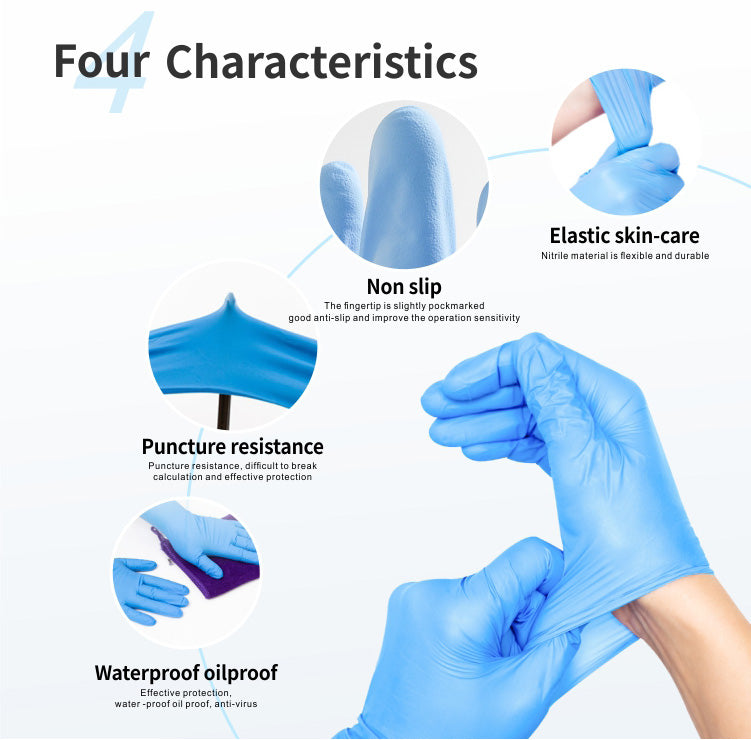
These blue nitrile disposable gloves are powder-free, latex-free, ambidextrous, textured at the fingertips, and single-use.
With 200 gloves per box, the larger-count package is particularly practical for California RCFE owners, ARF operators, assisted living facilities, board-and-care homes, memory care settings, caregivers, food-service staff, housekeeping teams, and residential care administrators maintaining frequently used PPE inventory.
In a residential care facility, glove usage can add up quickly. Staff may need fresh gloves repeatedly throughout a shift as they move between residents, personal-care activities, food preparation, cleaning duties, laundry, and other tasks.
A 200-piece box provides a larger supply in one package, helping facilities keep frequently accessed PPE stations better stocked.
Because the gloves are ambidextrous, either glove can be worn on the left or right hand, simplifying storage and dispensing.
Useful during appropriate personal-care activities where disposable gloves are indicated by standard precautions, resident care needs, or facility infection-control procedures.
Provides a disposable hand barrier during routine housekeeping, sanitation, room cleaning, bathroom cleaning, and other appropriate environmental-care tasks.
May be used for appropriate food-service activities when consistent with applicable food-safety practices and facility procedures.
Disposable gloves may be appropriate when caregivers or housekeeping staff handle soiled or contaminated linens.
May be used when disposable gloves are appropriate during an authorized medication-related task. Wearing gloves does not expand the scope of tasks a caregiver is permitted to perform.
Provides a disposable barrier during appropriate handling of household waste, personal-care waste, sanitation supplies, and other facility refuse.
Nitrile is a synthetic material that provides an alternative to natural-rubber latex gloves.
Nitrile is commonly valued for durability and resistance to routine punctures and tears during everyday work.
Designed to provide hand protection while preserving the dexterity needed for everyday caregiving, cleaning, food service, and facility tasks.
These nitrile gloves feature textured fingertips to help improve grip when staff are handling caregiving supplies, containers, cleaning equipment, food-service items, bottles, packaging, and other everyday objects.
This feature may be especially useful in residential care environments where caregivers frequently need both disposable barrier protection and reasonable hand dexterity.
Texturing can improve grip, but wet, oily, contaminated, or slippery items may still be difficult to handle. Replace gloves that become torn, damaged, excessively wet, or heavily contaminated.
Keep disposable gloves accessible near authorized resident-care supply areas for routine caregiving tasks.
Maintain gloves near cleaning supplies so staff have access to disposable hand protection when appropriate.
Useful for staff handling soiled bedding, clothing, or other potentially contaminated laundry.
May support appropriate food-preparation and food-handling tasks when used according to applicable food-safety practices.
A 200-count box can help facilities maintain additional PPE inventory for higher-use periods, outbreaks, increased care needs, or emergency supply planning.
Gloves may also be stored with designated care supplies when doing so is appropriate for the resident's care needs and facility procedures.
Nitrile gloves are commonly selected because nitrile generally offers useful resistance to oils, bodily fluids, and many chemicals when compared with some other disposable glove materials.
No disposable nitrile glove should be assumed to protect against every chemical.
Protection depends on factors including the specific substance, concentration, exposure duration, temperature, glove thickness, and manufacturer testing.
When using disinfectants, concentrated cleaners, solvents, hazardous substances, or other higher-risk chemicals, review the product's Safety Data Sheet and the glove manufacturer's chemical compatibility guidance.
| Product Type | Disposable Nitrile Gloves |
|---|---|
| Quantity | 200 Gloves Per Box |
| Color | Blue |
| Material | Nitrile |
| Latex | Latex-Free |
| Powder | Powder-Free |
| Hand Orientation | Ambidextrous — Suitable for Left or Right Hand |
| Grip | Textured Fingertips |
| Use | Single-Use Only |
| Reusable | No |
| Supplier Classification | Supplier Describes Product as Medical Grade |
| Sterility | Sterile Status Not Specified in Supplied Product Information |
| ASTM Standard | Not Specified in Supplied Product Information |
| FDA Classification / Clearance | Not Specified in Supplied Product Information |
| Chemotherapy Drug Testing | Not Specified in Supplied Product Information |
| Available Sizes | Select Available Size Variant; Confirm Manufacturer Size Chart Before Ordering |
A properly fitted glove should feel snug without being excessively tight.
Gloves that are too loose can reduce dexterity and may shift during use, while gloves that are too tight can become uncomfortable and may place additional stress on the material.
Staff should select the appropriate available size based on hand measurements and the manufacturer's size chart.
Disposable gloves supplement infection-control practices. They do not replace appropriate hand hygiene.
Staff should perform hand hygiene before and after glove use as appropriate and change gloves between residents, tasks, contaminated surfaces, or body sites when required by standard precautions and facility policy.
These gloves are single-use only. Do not wash, sanitize, disinfect, or reuse disposable nitrile gloves.
Gloves should be changed immediately when torn, punctured, visibly damaged, excessively contaminated, or otherwise compromised.
Wearing gloves does not authorize a caregiver to perform medication, clinical, wound-care, or other healthcare tasks that are outside the caregiver's authorized role or the facility's applicable regulatory requirements.
The supplier describes this product as medical grade, but the supplied product information does not identify a specific ASTM examination-glove standard, FDA clearance, sterile classification, or chemotherapy testing.
Facilities that require gloves meeting a specific clinical, examination, sterile, chemotherapy, chemical-protection, or regulatory standard should verify the manufacturer's supporting documentation before relying on these gloves for that use.
Disposable nitrile gloves should not be assumed to protect against every chemical, hazardous medication, chemotherapy agent, solvent, or other specialized exposure. Use hazard-specific gloves when required.
Each box contains 200 blue disposable nitrile gloves.
Nitrile gloves are synthetic disposable gloves made from nitrile rubber. They provide a latex-free alternative commonly used for personal care, sanitation, food handling, healthcare-related tasks, and other activities requiring a disposable hand barrier.
Yes. According to the supplied product information, these gloves are 100% latex-free and powder-free.
They may be used for appropriate resident-care activities when glove use is indicated by standard precautions, infection-control procedures, the resident's care needs, and the staff member's authorized responsibilities.
No. These nitrile gloves are intended for single use and should be discarded after use according to applicable facility waste-handling procedures.
Nitrile generally offers useful resistance to many oils, fluids, solvents, and chemicals, but protection varies significantly by substance and exposure conditions. Review manufacturer compatibility information and the chemical Safety Data Sheet when chemical protection is important.
Sterile status was not specified in the supplied product information. They should not be represented as sterile unless supporting manufacturer documentation confirms that classification.
Chemotherapy-drug testing or certification was not supplied. Facilities handling hazardous or chemotherapy medications should use gloves specifically tested and approved for that hazard.
Choose a size that fits snugly without excessive tightness. Measure the hand and review the manufacturer's available size chart before purchasing.
For operators searching for RCFE nitrile gloves, ARF disposable gloves, assisted living PPE, caregiver gloves, board-and-care infection-control supplies, latex-free gloves for residential care, senior living disposable gloves, food-handling gloves, housekeeping gloves, or cleaning gloves for assisted living homes , this 200-count box provides a practical higher-volume PPE option.
The combination of powder-free and latex-free nitrile construction, textured fingertips, ambidextrous fit, single-use convenience, and 200-glove box packaging makes these gloves suitable for consideration across resident personal care, housekeeping, sanitation, food service, laundry, waste handling, and other appropriate residential care operations.
The RCCS Assisted Living Marketplace presents products through the practical lens of RCFE owners, ARF operators, residential care administrators, caregivers, and assisted living facility operators — helping you understand not only what a product is, but how it may fit into resident care, infection-control practices, food service, housekeeping, PPE inventory, and the day-to-day operation of a residential care business.


Elevating residential care across California.